

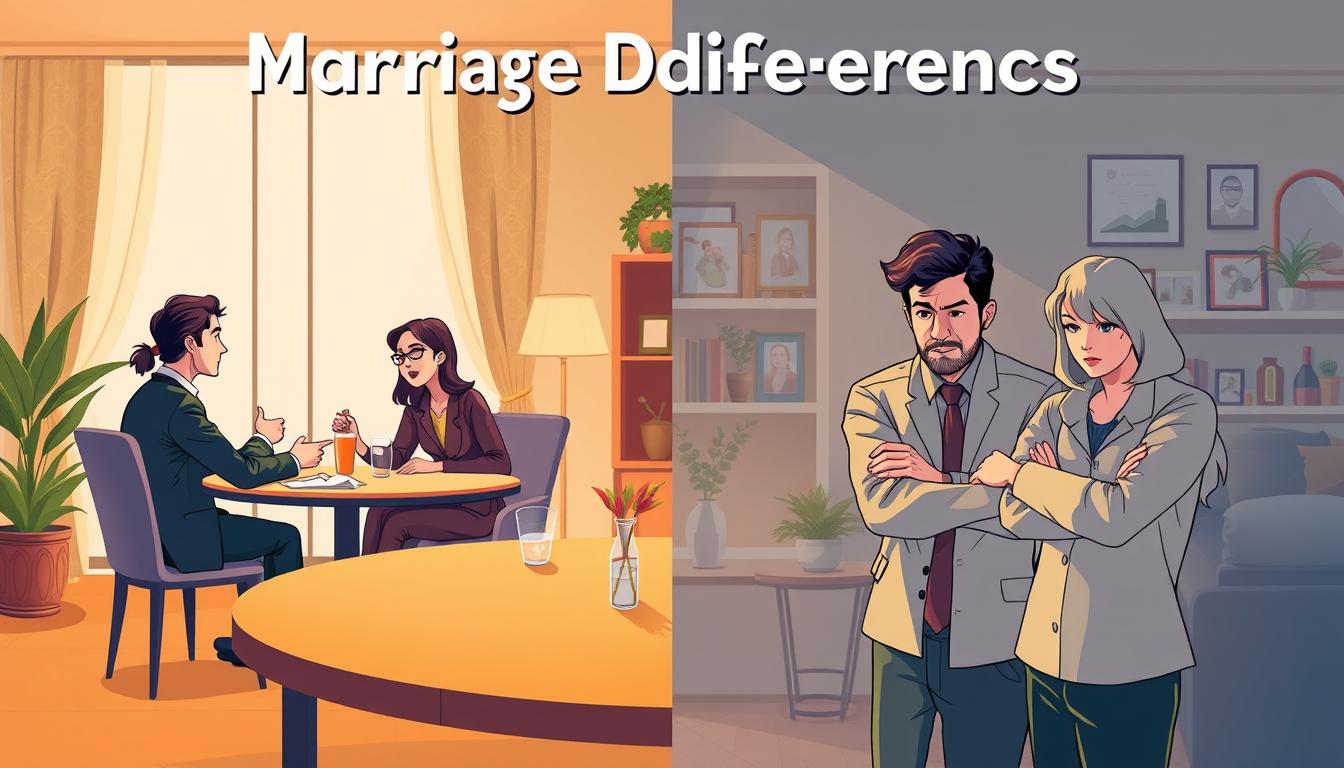
Marriage comes with its own set of challenges, like dealing with different opinions. Conflicts can pop up for many reasons. It’s key to handle these disagreements with understanding and respect.
Seeing marriage differences as normal helps couples focus on talking things out and respecting each other. Learning to manage disagreements can make your relationship stronger and help you grow as individuals. We’ll look at ways to solve conflicts, like better communication and finding common ground.
Key Takeaways
- Marriage differences are normal and should be approached with understanding.
- Effective communication is crucial for resolving conflicts in a relationship.
- Compromise plays a significant role in maintaining a harmonious partnership.
- Active listening techniques can help in addressing disagreements positively.
- Creating a safe space for discussions promotes mutual respect.
- Identifying triggers for conflicts can prevent escalation.
Understanding the Nature of Marriage Differences
Marriage differences come from the unique views each partner has. It’s key to understand these differences to build empathy and respect. When couples see their differences as strengths, their relationship grows stronger.
Recognizing Different Perspectives
Everyone’s background shapes their view of the world. This includes culture, social status, and family. Recognizing these differences helps couples have deeper conversations and understand each other better.
The Role of Individual Backgrounds
Our backgrounds greatly influence how we see marriage. Knowing each other’s backgrounds helps respect grow. It leads to finding common ground and building a stronger relationship.
Effective Communication in Marriage
Good communication is key to overcoming differences and building a strong marriage. Techniques like active listening and clear expression of feelings are crucial. They help couples face challenges together.
Active Listening Techniques
Active listening is vital for effective communication in marriage. It includes:
- Being fully present during talks to show you’re engaged.
- Summarizing what your partner says to show you understand and care.
- Asking questions to delve deeper into their feelings and thoughts.
Expressing Feelings Clearly
It’s important to share emotions clearly without blaming. Here’s how:
- Use “I” statements to express feelings without accusing.
- Describe specific situations that make you feel certain ways, not just general feelings.
- Focus on positive conversations that help both partners grow.
Studies show that couples who talk openly about their feelings are happier and less likely to argue. Using these methods can make your marriage a place where both feel heard and valued.
Building Respect in Relationships
Building respect in relationships is key to handling disagreements in marriage. This part talks about how to respect each other’s views, which is crucial when you disagree. It’s important to create a safe space for open talks, helping partners communicate better.
Honoring Each Other’s Opinions
In a committed relationship, it’s vital to respect each other’s opinions. When partners are patient and don’t shut down, they show respect. Every opinion matters, making both feel valued. Here are ways to respect different views:
- Listen without interrupting
- Validate feelings, even when disagreeing
- Ask open-ended questions to start a conversation
Creating a Safe Space for Discussions
Having a place where you can talk without judgment is key. When both feel safe to share, honesty grows. Start talks when calm, to avoid confusion. Here are tips for a supportive space:
- Choose the right time for talks
- Use “I” statements to share feelings
- Let feedback flow without interrupting
Conflict Resolution in Marriage
Dealing with conflicts in marriage needs careful thought. Knowing what causes fights helps couples handle disagreements better. Being aware of personal triggers can change how disagreements play out. This knowledge helps couples work towards solving conflicts together.
Identifying Triggers for Conflict
Finding out what starts fights is key in managing disagreements. These triggers often stem from deep feelings or past issues. Common ones include:
- Communication styles that cause misunderstandings.
- Unmet expectations regarding responsibilities.
- Previous unresolved conflicts resurfacing.
Talking openly about these triggers can help prevent fights from getting worse.
Strategies for Effective Resolution
Using certain strategies can make solving conflicts easier. The ‘pause technique’ is one such method. It lets partners calm down before discussing tough issues. This can stop arguments and help clear up misunderstandings when emotions are high.
Trying different ways to negotiate can also lead to better solutions. Knowing if one partner likes to talk directly or if they prefer mediation can help find common ground. Getting help from a marriage counselor can give couples tools to deal with conflicts in a positive way.
Compromise in Relationships
Compromise is key to keeping peace in any marriage. It means both partners are ready to change their views. This creates a space where differences can be solved.
This approach values flexibility and fairness. It helps couples find solutions that match their shared values.
Finding Common Ground
Finding common ground is crucial for compromise. It starts with open talks where both share their dreams and worries. Listening well helps understand each other better.
By brainstorming together, couples can find creative solutions. These solutions meet both partners’ needs.
Negotiating Solutions
Good negotiation is essential for solving conflicts in marriage. It’s important to work together, not against each other. Proposing solutions means sharing your needs and listening to the other’s ideas.
Discussing options together can lead to agreements that benefit both. Practical steps include setting aside time for talks and making a list of priorities. With practice, couples can improve their negotiation skills, making their relationship stronger.
Marriage Differences, Conflict, Respect, Communication, Compromise
Dealing with differences in marriage needs careful planning. Couples facing disagreements can greatly benefit from certain strategies. These help in understanding and working together. Using the right marriage therapy techniques can turn conflicts into chances for growth.
Techniques for Managing Disagreements
There are several important techniques for handling disagreements. These help couples find common ground. They include:
- Collaborative problem-solving: This method makes partners work together, aiming for solutions that please both.
- Interest-based negotiation: Each person shares their main interests, leading to outcomes that respect both views.
- Active listening: Really listening to each other’s views is key to respect and understanding.
Leveraging Strengths to Resolve Issues
Every partner has unique strengths in a marriage. Using these strengths can improve conflict resolution. For example:
- A partner with strong emotional intelligence can spot feelings during disputes.
- Someone with analytical skills can list options when a choice is needed.
- A creative thinker might suggest new solutions that neither thought of.
By focusing on teamwork and collaboration, couples can reach shared goals. They can do this while valuing each other’s strengths. Using these strategies, partners can manage disagreements better, leading to a more united relationship.
Conclusion
Understanding marriage differences is key to a happy relationship. It’s not just about solving conflicts. It’s about building a strong bond based on respect, good communication, and compromise.
These elements help couples overcome obstacles together. They make their relationship stronger by understanding and working as a team.
We’ve talked about the value of seeing things from different angles and respecting each other’s views. This creates a safe space for open talks. Good communication lets partners share their feelings and listen well, leading to deep conversations.
The path through marriage differences may be tough, but the benefits are huge. By using these strategies every day, couples can build a strong and lasting relationship. A relationship built on respect, understanding, and compromise is the foundation of true love and stability in marriage.