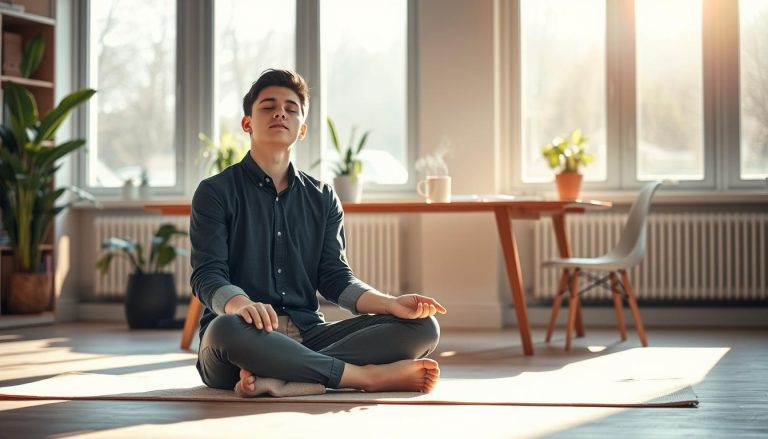

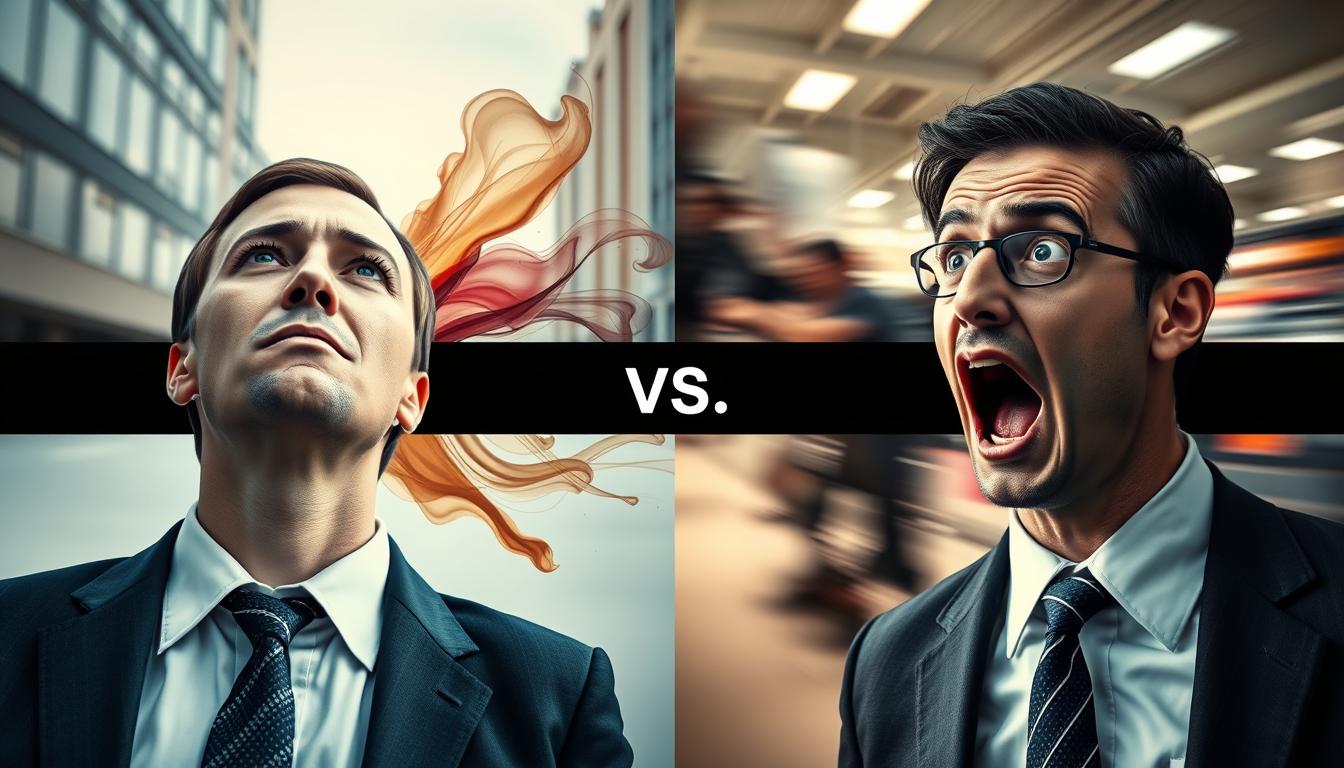
It’s key to know the difference between emotion and reaction to control our feelings better. Emotions are the feelings we have inside, like happiness, anger, or sadness. Reactions are how we show these feelings outside, through what we say or do.
Understanding this difference helps us not react too quickly. It’s the first step to being more emotionally smart and controlling our actions in our daily lives.
Key Takeaways
- Emotions are internal experiences; reactions are outward expressions.
- Recognizing the distinction is vital for effective emotional control.
- Self-regulation depends on managing reactions, not suppressing emotions.
- Awareness of emotion vs reaction helps improve interpersonal relationships.
- Mastering this difference supports better decision-making under stress.
Understanding Emotions: Defining the Core Concepts
Emotions are more than just reactions. They are complex experiences that help us survive and connect with others. By understanding emotions, we can improve our emotional intelligence and mindfulness.
The Nature of Emotions
Emotions mix physical and mental responses to events. They change our brain chemistry, leading to different feelings and states. Once an emotion starts, it can shape our thoughts, actions, and even our long-term feelings. This shows why knowing and managing our emotions is key.
Types of Emotions and Their Significance
Each emotion has its own role in our lives. Basic emotions like joy, anger, fear, sadness, and surprise are all important:
- Joy helps us connect and feel fulfilled.
- Anger can push us to make changes or stand up for what’s right.
- Fear warns us of dangers and prepares us to react.
- Sadness helps us empathize and adjust to big losses.
- Surprise makes us more alert and open to new things.
Knowing these emotions and their triggers helps us grow our emotional intelligence. This skill is crucial for dealing with complex social situations. It also shows the value of mindfulness in managing our emotions, leading to a more balanced life.
Defining Reactions: What They Are and How They Differ
Reactions are key to how we act, showing how we respond to things around us. They can be quick or thought out, often after we feel something strongly. Knowing the difference between emotion and reaction helps us control our feelings better.
Instantaneous Reactions vs. Thoughtful Responses
When we talk about emotion vs reaction, some reactions happen fast, without thinking. These are often about survival. But, thoughtful responses take time and thought. They consider the situation and what might happen next.
- Instant reactions such as flinching from a hot surface
- Thoughtful responses like choosing to discuss feelings of anger rather than expressing them through aggression
The Role of Impulse in Reactions
Impulse is big in how we react, often skipping the thinking we need for control. Acting on impulse can lead to choices we might later regret. This shows why learning to control ourselves is so important.
“Acting on impulse often bypasses the opportunity for meaningful reflection, making it harder to align reactions with long-term intentions.”
By knowing what triggers us and learning to pause, we can change quick reactions into thoughtful ones. This change is key to better managing our emotions and reactions.
Emotion vs Reaction: Key Differences That Matter
It’s important to know the difference between emotions and reactions. This helps us understand ourselves better and control our feelings. By learning these differences, we can improve how we react to things.
How Emotions are Felt
Emotions are complex feelings inside us. They start with physical changes like heart rate and breathing. Then, our brain makes sense of these changes, leading to feelings like sadness or joy.
These feelings can happen without us even realizing it. They can change our mood and thoughts, preparing us for how we’ll react.
The Mechanism Behind Reactions
Reactions are how we show our emotions outside. They start in the emotional part of our brain and are then controlled by our decision-making part. Learning to control these reactions is a skill we can get better at.
In short, understanding emotions and reactions helps us manage our first thoughts better. This is key for growing as a person and working well with others.
The Importance of Emotional Control in Daily Life
Learning to control your emotions is key for better daily interactions and stress management. It’s vital in personal, work, and solo activities. Skills like emotional intelligence and mindfulness help you react and interact better with the world.
Techniques to Enhance Emotional Control
- Deep Breathing Exercises: Slow, deep breaths help reduce stress and gain control over your emotions, leading to a calmer mind.
- Cognitive Restructuring: This method involves changing negative thought patterns to more positive ones.
- Mindfulness Meditation: Regular meditation boosts awareness in the present moment, essential for emotional control.
- Journaling Emotions: Writing down your thoughts and feelings helps gain perspective and manage emotions.
Benefits of Practicing Emotional Control
Developing strong emotional control offers many benefits beyond just feeling calm. Regular practice leads to:
- Improved Decision-Making: Better emotional control means making more thoughtful choices, avoiding impulsive ones.
- Reduced Conflict: Emotional control leads to clearer communication and fewer misunderstandings.
- Enhanced Mental Health: Effective emotional management can lower anxiety and depression.
- Stronger Relationships: By responding thoughtfully, you build stronger, more empathetic connections.
These benefits show how emotional intelligence and mindfulness can greatly improve your life. They turn daily challenges into chances for growth and connection.
The Power of Pause: Why Taking a Moment Matters
Pausing for a moment between feeling an emotion and reacting can greatly improve emotional control and mindfulness. This simple act helps us manage our reactions better. It also helps us understand our personal triggers and behavior patterns.
By making pausing a habit, we can break automatic processes. This gives us the chance to choose a response that matches our values and goals.
Using mindfulness during these pauses can change how we react in stressful situations. A pause helps us move from a reactive to a more reflective state. This improves our emotional intelligence and how we interact with others.
How a Pause Can Transform Your Reaction
In today’s fast-paced world, taking a pause is crucial. It lets us access our brain’s prefrontal cortex, which handles complex thinking. This pause allows us to think calmly, deliberate, and respond with our true intentions.
Mindfulness plays a key role in this process. It teaches us to be present without judgment or immediate action.
Implementing the Pause in Everyday Situations
To make pausing a part of our daily lives, we can use simple methods:
- Count to ten before responding in a conversation that triggers you.
- Do mindful breathing exercises to calm your thoughts and emotions before making decisions.
- Step back mentally and observe your feelings and thoughts as if you’re an impartial observer.
These simple techniques can help us control our emotions better. They make our reactions more thoughtful and effective. By embracing the pause, our responses become aligned with our long-term goals, not just immediate emotions.
Awareness in Emotional Responses: The First Step Towards Change
Developing emotional awareness is key to changing how we feel and react. By knowing and naming our emotions, we start a big change in how we handle feelings.
It’s not just about feeling happy or sad. It’s about knowing what makes us feel that way. This careful attention helps us think before we act, making our interactions better.
Mindfulness is very important here. It helps us watch our feelings without judging. This is crucial for a calm and responsive emotional life. Meditation and deep breathing help a lot, making us better at controlling our feelings.
- Identify emotions as they arise, fostering greater emotional intelligence.
- Implement mindfulness techniques to maintain a non-reactive state of mind.
- Practice consistently to reinforce emotional awareness and regulation.
By following these steps, we build a strong base in our personal and work lives. This leads to deeper and more rewarding connections. The journey to better emotional awareness is closely linked with growing emotional intelligence and self-regulation. Every emotional moment becomes a chance to learn and grow.
Emotional Intelligence: Bridging Emotions and Reactions
In today’s world, knowing how to handle your emotions and understand others is key. This is called emotional intelligence (EI). It’s important for personal growth and for better relationships at work and home.
Emotional intelligence means being aware of your feelings and those of others. It also means controlling your emotions and responding well. This helps you deal with social situations and create a positive atmosphere.
What is Emotional Intelligence?
At its heart, emotional intelligence is about knowing and managing your feelings and understanding others’. It’s built on several important parts:
- Self-awareness – Knowing your own emotions and how they affect you.
- Self-regulation – Controlling your emotions and adapting to new situations.
- Motivation – Using your emotions to stay focused and keep going towards your goals.
- Empathy – Getting and valuing other people’s feelings, which helps in leadership and solving conflicts.
- Social skills – Handling relationships to get what you want, whether leading or negotiating.
The Impact of Emotional Intelligence on Relationships
People with high emotional intelligence have stronger relationships. They’re good at understanding and responding to others’ feelings. They also control their emotions well in social situations.
They’re great at reading social signals and changing their behavior to fit the situation. This builds respect and understanding.
Moreover, emotional intelligence helps communication. People with EI are skilled at persuading and influencing others. This is important for keeping relationships strong and happy.
In the end, emotional intelligence helps turn quick reactions into thoughtful responses. It shapes both personal and community spaces in lasting, positive ways.
Conclusion
Knowing the difference between emotion and reaction is key to better emotional control. This article showed that emotions are what we feel inside, while reactions are how we show those feelings. By learning to understand our emotions, we can react more thoughtfully.
Practicing mindfulness and taking a moment to pause helps us choose our responses. This makes us more aware and lets us think before we act. It leads to better relationships and personal growth.
Improving emotional intelligence takes time and effort. It means being aware of our feelings and controlling our reactions. With mindfulness and practice, we can handle emotions better, leading to a happier life. This approach helps us grow emotionally and stay strong.